LLM SEO
LLM SEO: getting ChatGPT and Claude to cite your content
LLM SEO is a newer discipline than classic SEO, with different rules. Here's what actually gets a language model to reference your brand instead of a competitor's.
Why LLM SEO is a different game
A search engine returns a ranked list of pages and lets the user decide. A language model reads a handful of sources, synthesizes one answer, and decides for itself which sources to mention. That shift moves the goal from “rank higher than competitors” to “be the clearest, most specific answer to this exact question” — which is a genuinely different content strategy, not just classic SEO with an extra checkbox.
What Peakfai does differently
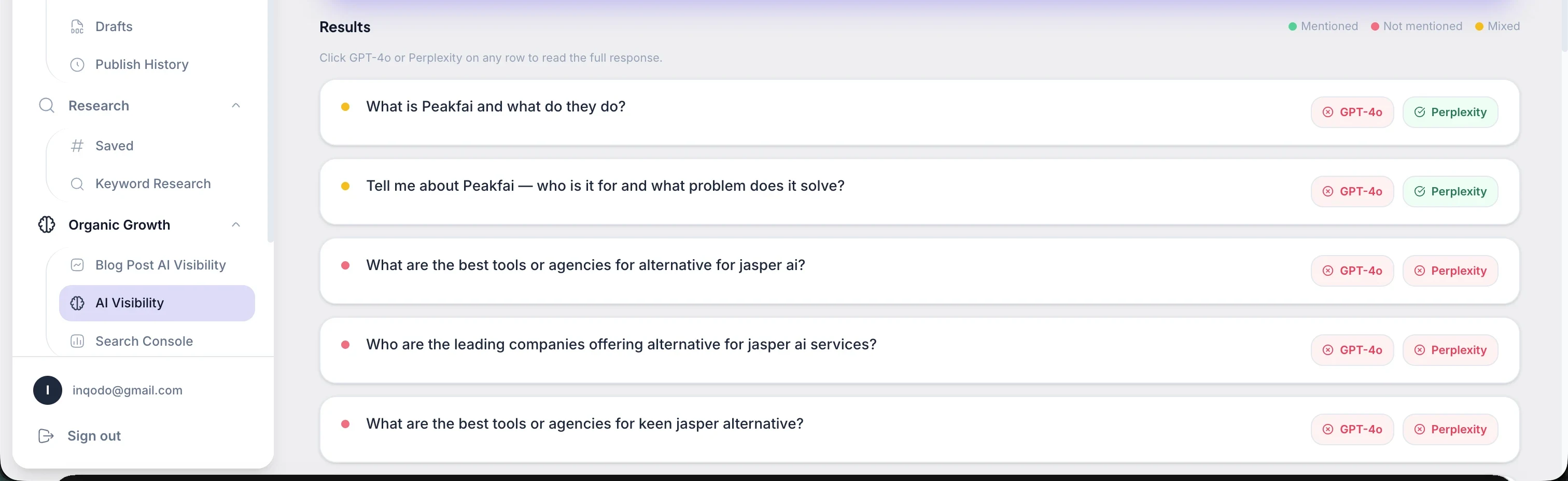
Every post Peakfai publishes is written to answer a real, specific buyer question directly. The same discipline that produces content Google ranks also tends to produce content LLMs cite. Peakfai then tests your actual visibility by asking GPT-4o and Perplexity the questions your buyers ask, so you're not guessing whether the strategy is working.
What LLM-cited content looks like in practice
Take a question like "what's a reasonable SEO content budget for a small SaaS company." A page that opens with "it depends on many factors" and spends three paragraphs on caveats before offering a number gives an LLM nothing concrete to quote. A page that opens with "most small SaaS teams spend $500-2,000/month on SEO content between tools and a writer or retainer" gives it something specific enough to lift directly into an answer.
The caveats and nuance still matter and still belong on the page — they just belong after the direct answer, not before it. That ordering is the single highest-leverage change most existing content is missing.
Frequently asked questions
LLM SEO is the practice of writing and structuring content so large language models (GPT-4o, Claude, Gemini) are more likely to reference or cite it when generating an answer. It sits alongside traditional SEO rather than replacing it: classic SEO earns rankings in search results, LLM SEO earns mentions inside AI-generated answers.
There isn't one universally-used term yet — you'll see LLM SEO, AEO (answer engine optimization), and GEO (generative engine optimization) used almost interchangeably. All three describe the same underlying goal: getting an AI system to cite your content as a source, which rewards direct answers and real specifics over the backlink-and-keyword-density signals classic SEO relies on.
No. Google's ranking factors are heavily weighted toward backlinks, domain authority, and technical SEO. LLMs generating an answer weigh how directly and concisely a page answers the specific question being asked, right now. A smaller, newer site with one excellent, specific answer can get cited over a bigger site with a vaguer one.
Yes, and it's usually the fastest win available. Take a page that already ranks reasonably in Google, add a direct one-to-two sentence answer near the top, back it with a real number or specific fact, and structure the rest in clear question-and-answer blocks. That's most of what separates content LLMs cite from content they skip.
Writing to sound authoritative rather than to be useful: vague, confident-sounding claims without a specific number or fact behind them. LLMs weight specificity heavily; a sentence like "significantly improves efficiency" gets skipped in favor of one that says "cuts setup time from 3 hours to 20 minutes."
No, if anything it hurts, since it reads as promotional rather than informative, and LLMs are trained to prefer neutral, factual sourcing. The content that gets cited reads like it was written to genuinely answer a question, not to rank for a brand term.